
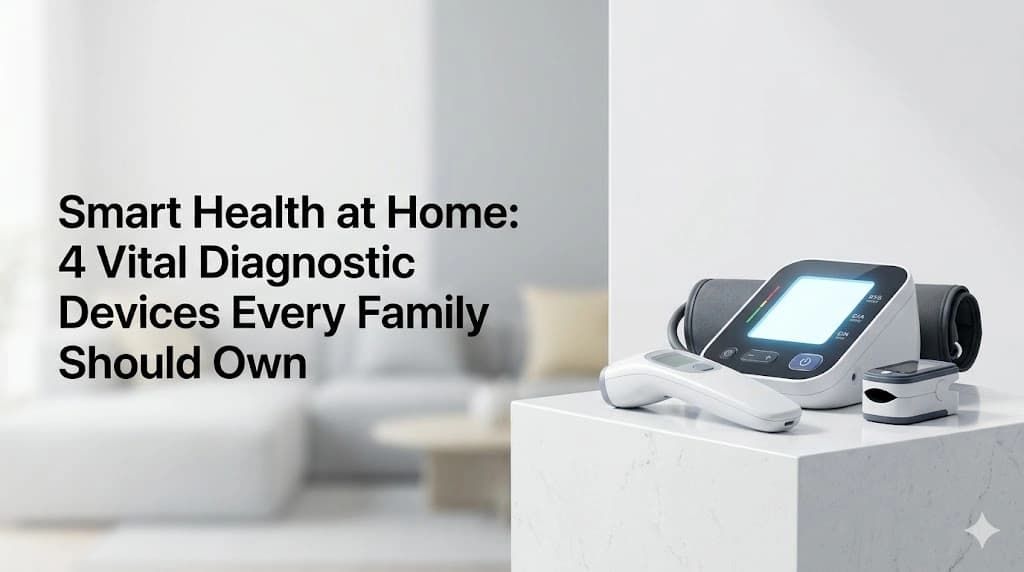
In the fast-paced world we live in, health emergencies can arise when we least expect them. While regular doctor visits are essential, keeping a close eye on your family’s day-to-day well-being starts right at home. This is especially true for households with vulnerable family members, such as growing children or elderly parents, where a minor symptom can quickly escalate if left unnoticed.
Modern technology has made it incredibly simple to monitor primary vital signs accurately. Having a mini "health dashboard" in your medicine cabinet gives you the data you need to make informed decisions and catch potential issues early.
Here are the four essential, user-friendly diagnostic devices every family should own.
1. Digital Blood Pressure Monitor
Hypertension (high blood pressure) is often called a "silent killer" because it rarely shows obvious symptoms until it causes severe complications like stroke or heart issues.
Why You Need It: An automated, upper-arm digital blood pressure monitor allows you to track trends over time.
The Family Advantage: For elderly parents management of chronic conditions is simplified. Keeping a daily log of their readings provides invaluable data for their physician during routine checkups, ensuring their medication doses are perfectly tailored.
2. Pulse Oximeter
The pulse oximeter became a household staple globally during recent respiratory health crises, and its importance remains unchanged. This tiny, clip-on finger device measures your oxygen saturation levels ($SpO_2$) and heart rate within seconds.
Why You Need It: It acts as an early warning system for respiratory distress. Normal oxygen levels typically range between 95% and 100%.
The Family Advantage: If a family member is suffering from a severe seasonal flu, asthma, or bronchitis, a pulse oximeter helps you identify "silent hypoxia"—a dangerous drop in oxygen levels that doesn't immediately cause shortness of breath—so you know exactly when to seek emergency medical care.
3. Contactless Infrared Thermometer
Gone are the days of struggling with mercury thermometers or waiting minutes for an oral reading while keeping a restless child still.
Why You Need It: Infrared thermometers read thermal radiation from the forehead, giving an instant, highly accurate temperature reading without any physical contact.
The Family Advantage: This is a lifesaver for parents with toddlers or babies. You can monitor a sick child's fever in the middle of the night without waking them up. Furthermore, the contactless design prevents cross-contamination between sick family members.
4. Digital Blood Glucose Meter (Glucometer)
Even if no one in your immediate family currently lives with diabetes, a glucometer is an incredibly smart investment for preventive health tracking.
Why You Need It: It measures the concentration of glucose in the blood using a tiny drop of blood on a disposable test strip.
The Family Advantage: For families managing diabetes, it helps track how food, medication, and stress affect blood sugar levels. For others, occasional fasting blood sugar checks can help detect pre-diabetes early, allowing for timely dietary adjustments.
Conclusion: Empowerment Through Data
Owning these four basic diagnostic tools turns passive worrying into active health management. They don't replace the expertise of a trained medical professional, but they do act as your first line of defense. By tracking vitals at home, you can confidently distinguish between a mild discomfort that can be managed with rest and a critical situation that requires a trip to the clinic.
Which of these essential devices do you already have at home, or are you looking to add a banner for this blog as well?